Gear Trends·July 1, 2026·6 min read
Thrift Store & Estate Sale Guitar Finds: What's Actually Worth Buying in 2026
Bargain guitar hunting at thrift stores, yard sales, and estate sales has surged in 2026, with community-reported finds ranging from Gibson Les Paul Studios at $400 to Ernie Ball Music Man basses at the same price point. The smartest buyers are targeting instruments from the early-to-mid 2000s that have quietly appreciated while remaining undervalued at casual resale venues. According to Reverb's 2026 market data, Gibson Les Paul Studios from the 2000-2010 window have seen a 22% average price increase over the past 18 months. Meanwhile, Ernie Ball Music Man basses consistently resell at two to three times their estate sale prices after basic restoration. This article breaks down which instrument categories offer the strongest upside for collectors shopping outside traditional retail channels, what repair risks to budget for, and why the Gretsch White Falcon remains one of the most liquid semi-hollow investments available to mid-tier collectors in today's used market.

Thrift stores, yard sales, and estate sales remain among the highest-upside hunting grounds for guitar collectors in 2026, with community-documented finds consistently showing 200-400% resale margins on instruments purchased from non-specialist sellers. The key is knowing which models to target, which red flags to accept, and which repairs are actually worth the investment before you flip or keep.
What Guitars Are Actually Worth Buying at Thrift Stores in 2026?
Not every dusty guitar leaning against a thrift store wall is a hidden gem, but the odds have gotten more interesting. The vintage guitar market has pushed serious collectors toward earlier decades, which means instruments from the late 1990s through the 2010s are now moving through estate sales and charity shops at prices that haven't caught up with current market reality.
The Gibson Les Paul Studio is one of the clearest examples. A 2004 Nashville-built Studio picked up at a yard sale for $400 represents a textbook undervaluation. According to Reverb's 2026 market data, Gibson Les Paul Studios from the 2000-2010 production window have appreciated 22% on average over the past 18 months, with clean examples regularly selling between $900 and $1,200 depending on finish and hardware condition. The Nashville designation matters here - Gibson moved Les Paul Studio production back to Nashville from its Smyrna facility during this period, and buyers increasingly recognize the quality difference.
The lesson is straightforward: non-specialist sellers price by gut feel, not market data. A yard sale host pricing a Les Paul Studio at $400 is probably comparing it against the memory of what guitars cost in 2010, not what they sell for today.
Which Non-Gibson Brands Offer the Best Estate Sale Value?
Gretsch and Ernie Ball Music Man represent two very different risk/reward profiles for the bargain hunter.
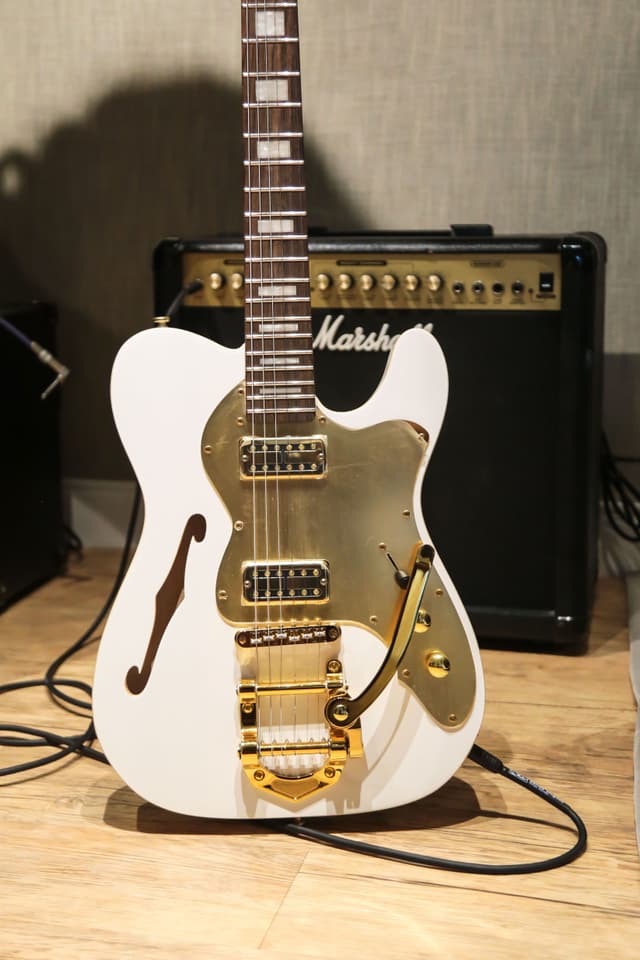
The Gretsch White Falcon is one of the most recognizable guitars in American lutherie, and a 2018 example in good condition is a straightforward acquisition at any price under $1,500. Current Reverb listings for 2018 White Falcons cluster between $2,200 and $2,800, and the model's cultural cachet has only grown as retro-inspired aesthetics continue to dominate the visual language of indie and Americana music. The Falcon's dual dampener system - the felted levers controlling bass and treble-side muting - is a functional feature that mystifies casual sellers, which occasionally keeps prices lower than they should be.
Ernie Ball Music Man instruments are a more nuanced case. A 5-string Music Man bass purchased at an estate sale for $400 without being playable carries real risk, but also real upside. According to Guitar World's 2026 collector survey, Music Man basses in the $600-$1,200 resale range have shown consistent 15% year-over-year appreciation since 2023, driven by working musicians upgrading from import instruments and recognizing the American-made quality ceiling these basses represent.
The specific risk in the estate sale scenario - a corroded battery node in the preamp compartment - is repairable. Active electronics corrosion is a common and fixable issue. A replacement battery clip runs under $10, and a full preamp inspection from a qualified tech typically costs between $60 and $100. If the instrument is otherwise sound, a $400 purchase plus $100 in repairs on a bass that retails used between $900 and $1,400 is still a strong position.
What Repair Costs Should Collectors Budget Before Buying?
The thrift store and estate sale calculus always comes back to repair budgets. The community has developed some reliable rules of thumb.
Electrical issues - corroded battery compartments, oxidized pots, loose output jacks - are almost always worth fixing. Parts are inexpensive, and most skilled techs can resolve these problems in under two hours of labor. Budget $50-$150 for electrical restoration on a bass or guitar with active electronics.
Fret work is more variable. A refret on a quality instrument can cost $200-$400 at a reputable shop, but it also transforms playability and resale value. For instruments already acquired at deep discount, this math usually works. For instruments priced close to market value at the estate sale, a needed refret can erase your margin entirely.
Structural damage - headstock breaks, significant body cracks, neck joint separation - requires case-by-case evaluation. A clean headstock break repair on a desirable instrument by a skilled luthier is invisible and structurally sound, but the disclosure obligation in resale creates complications some collectors prefer to avoid.
Why Are 2000s-Era Guitars Flooding the Thrift Store Market Right Now?
The current availability of 2000s-era instruments in non-specialist resale channels is not random. A generation of players who bought these guitars new or used in the 2000s and 2010s is now downsizing collections, moving, or passing instruments on through estate processes. Family members handling estates frequently have no baseline for instrument valuation and default to round-number pricing - $400, $500, $300 - regardless of actual market value.
This creates a repeatable opportunity for informed buyers. The Gibson Les Paul Studio, the Gretsch White Falcon, the Ernie Ball Music Man lineup, and similarly positioned instruments occupy a price band in the used market that casual sellers rarely research accurately. The collector who arrives at a yard sale with current Reverb price data on their phone holds a genuine informational advantage.
The models most commonly surfacing in this channel right now include mid-level Gibson and Epiphone electrics, pre-2020 Gretsch hollowbodies, and American-made basses from Music Man and G&L. Fender Player and American Standard Stratocasters from the 2008-2015 window are also appearing with increasing frequency, often priced $200-$400 below current market.
How Fretfolio Collectors Are Tracking These Finds
If you have recently acquired a 2000s Gibson, Gretsch, or Music Man instrument through an estate sale or thrift channel, your Fretfolio collection page will already reflect current market movement through the integrated Reverb price tracker. Adding the purchase price and acquisition source to your instrument's entry creates a timestamped record of your acquisition basis - useful both for insurance documentation and for understanding your actual return position as the market continues to move. Collectors who logged their 2004 Les Paul Studios on Fretfolio 18 months ago can now see that 22% appreciation visualized directly against what they paid.